
Europe’s Silent Food Crisis: Fishermen, Farmers, and the Vanishing Middle Class
By Jan Arve Berdal as a Special Commentary
Europe is drifting into a food crisis that few politicians acknowledge and even fewer newsrooms bother to cover. Across the continent, fishermen, farmers, and retailers are sounding the alarm — but the institutions meant to listen appear more focused on long-term climate targets than the short-term survival of the people who feed the continent.
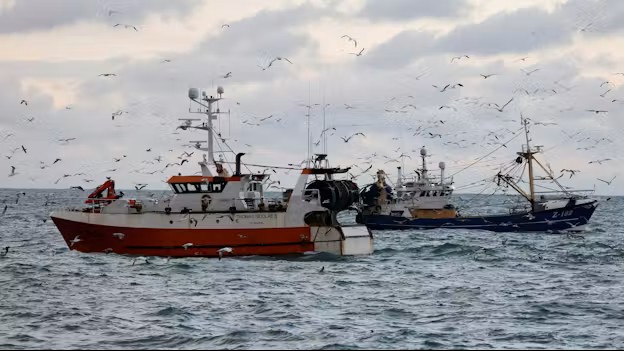
From France to Spain, the story is the same: fuel prices have reached levels that make fishing economically impossible. Entire fleets remain tied up in port, not because the seas are empty, but because the cost of leaving the harbor now exceeds the value of the catch. French fishermen say openly that “Europe is killing us.” Their Spanish colleagues report that fresh fish is being thrown away in supermarkets because consumers can no longer afford it.
Meanwhile, meat producers face a similar collapse. Supermarkets across Europe are offering 20–50% discounts on beef, pork, and poultry — not as a gesture of generosity, but as a desperate attempt to prevent mass spoilage. Even with these discounts, large quantities still end up in the trash. The supply chain is cracking, and the public is quietly losing access to fresh protein.
Yet the political response remains strangely detached. Brussels continues to push forward with new energy taxes, green transition mandates, and regulatory expansions, all while insisting that the crisis is temporary. For many Europeans, the message feels like this: “We hear your suffering — but we have other priorities.”
The result is a growing sense of instability. When basic goods become unaffordable, when fishermen cannot fish, when farmers cannot farm, and when supermarkets cannot sell what they have, societies begin to fray. Europe is approaching the ancient warning: “When the manger is empty, the horses bite.”
This is not a call for panic — it is a call for awareness. A continent cannot function when its food producers are collapsing under the weight of fuel prices, taxes, and policies that ignore economic reality. Nor can it thrive when citizens feel unheard, unseen, and increasingly unable to afford the essentials of life.
Europe’s leaders insist that the green transition is non-negotiable. But for millions of Europeans, the question is becoming unavoidable: What good is a greener future if the present is already falling apart?
If the current trajectory continues, the continent may soon face something far more dangerous than inflation or supply shortages: a public that no longer believes its leaders understand or care about the world ordinary people live in.
You are welcome to use the comment section, just remember to keep it clean and nice.

Add comment